|
|
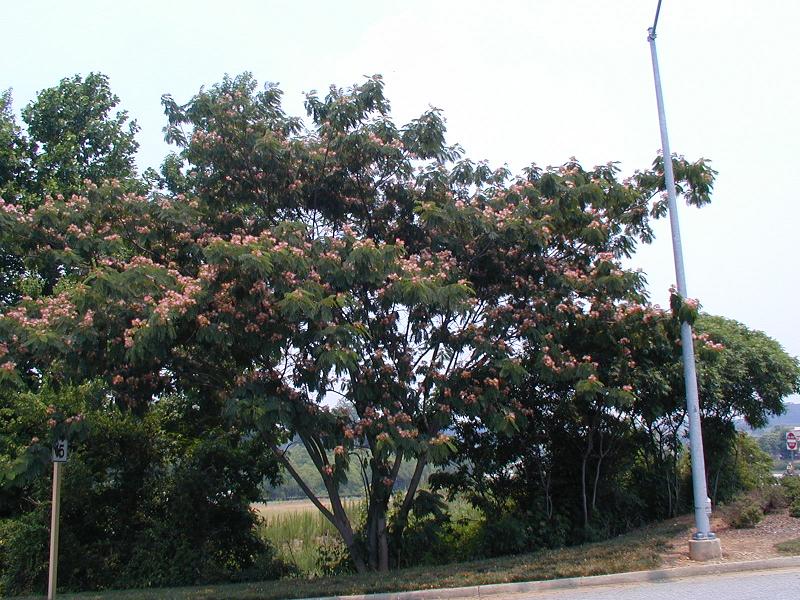
Mimosa trees can now be seen in bloom with their feathery pink flowers. This tree is native to Asia and has escaped cultivation to invade and disturb a wide range of ecosystems. The trees don't live long due to a fatal wilt disease but manage to produce copious amounts of seeds. Mimosa is a Category 1 invasive plant in Georgia. Despite its attractive flowers, intentionally cultivating this tree is environmentally irresponsible. |
|
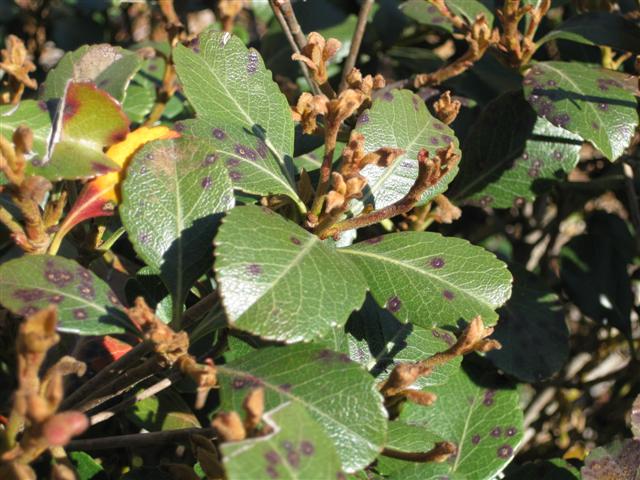
The recent abundant rainfall may cause us to label this year as the "Year of the Spots." I'm seeing spots on all sorts of plants this year from this Indian Hawthorn to oaks, maples, hydrangeas, roses, dogwoods, etc. Many of these are fungal diseases which won't lead to long term harm but can be treated by pruning to allow more air circulation and/or sunlight and with the judicial use of fungicides, although control will be difficult this late in the season. I would also suggest completely replacing the mulch this fall from around severely affected plants. Note: powdery mildew is probably also going to rampant this summer. |
|
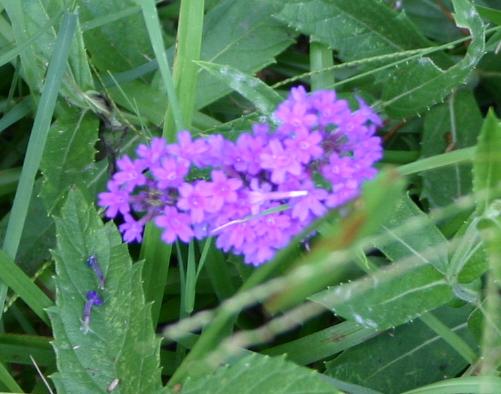
Along the medians and shoulders of 85, 75 and parts of 285 this non-native verbena can be seen in bloom. Less than 12 inches tall and covered with bright lavender flowers, it's easy to spot. Unfortunately, this plant is considered an exotic invasive. For the landscape and roadside plantings, our native groundcover verbena (Verbena canadensis 'Homestead Purple') would make a better choice. |
|
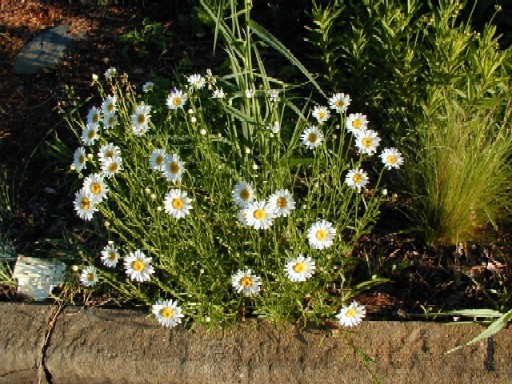
Pretty is as pretty does my grandmother used to always say. Such is true for the oxeye daisy. Oxeye Daisy can be seen in bloom now along roadsides and in disturbed areas. This perennial weed is native to Europe and has escaped cultivation in all 50 states, including Alaska and Hawaii. It's a banned noxious weed in 5 states and is sure to be added to others. Consider using Shasta Daisy (C. maximum) as an alternative. |
|
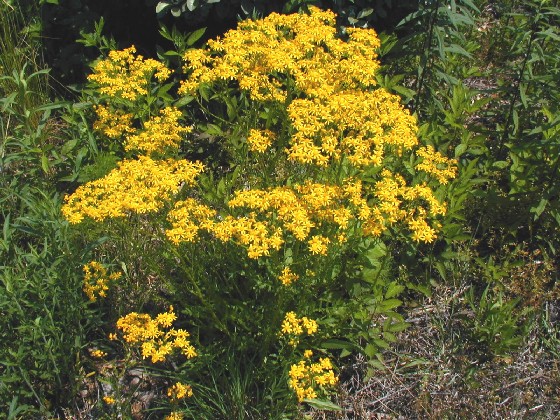
Fields of yellow are adorning the roadsides of north Georgia as the native butterweed is in bloom. Although some consider it a weed, I find it to be attractive and fairly well-behaved. The tiny yellow daisy-like flowers are atop stems 18-24 inches tall. This plant forms a tidy clump and spreads by seed. Although somewhat short-lived, the seedlings will make up for the loss of older plants. |
|
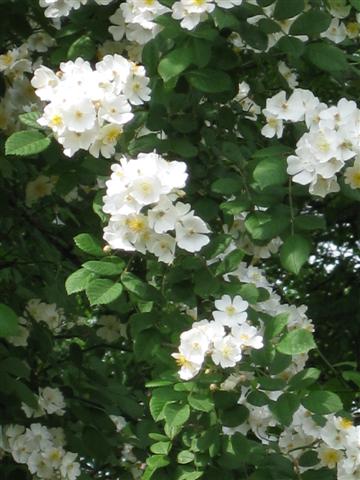
Along disturbed roadsides, in fields and along fences throughout Georgia the multiflora rose can be seen blooming and sprawling over trees and shrubs. The flowers are 5-petaled white to lightly pink and have yellow centers. A native of Asia, multiflora rose is listed as a Category 1 (the worst category) invasive plant in Georgia which is defined as an "Exotic plant that is a serious problem in Georgia natural areas by extensively invading native plant communities and displacing native species." After flowering, the plant will produce small pink to red hips that are eaten by birds. Multiflora rose also spreads by runner and stems which root where they contact the soil. If you have this plant, please consider removing it and replacing it with a non-invasive rose or another vine. |
|
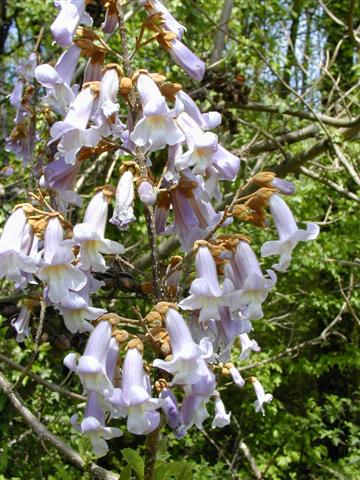
The Empress Tree (aka Royal Paulownia) is a weed tree from China once imported as a landscape tree. They have huge leaves and stalks of purple flowers that resemble wisteria pointing upwards. So invasive are these trees, that they are taking over parts of the Blue Ridge Parkway. Mature trees can produce 20,000 seeds per year. The trunk and limbs tend to be hollow. This tree is best eliminated from the landscape. |
|
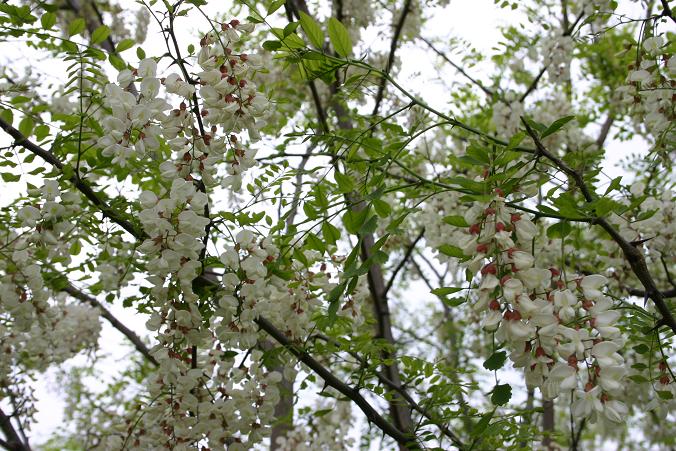
The black locust is a Georgia native tree that reaches 80 feet tall and produces white flowers that hang down in 6-10 inch clusters that resemble grapes or white wisteria. There is an impressive stand along I-285 on the north side near the junction with I-75. It appears that some of these were intentionally planted. Although very attractive in bloom, the trees tend to become infested with leaf miners in summer. It can also aggressively colonize areas and therefore should not be planted outside of its native range (central and southeastern U.S.). |
|
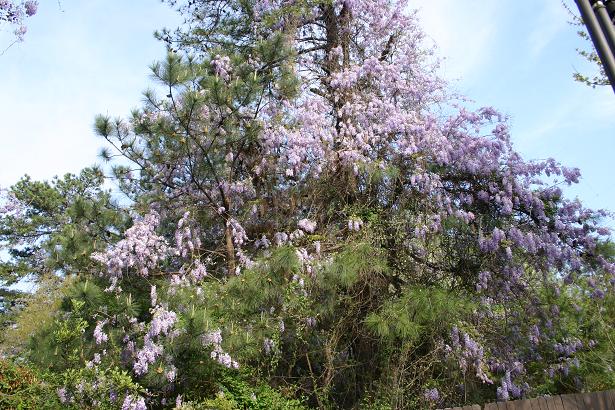
As pretty as these flowers may appear, they are death to whatever plants get in their way. The Asiatic Wisterias (sinensis and floribunda) are among the worst invasive plants in the Southeast. I cannot stress strongly enough what a bad idea it is to put these in your landscape. Plant cultivars of our native Wisteria frutescens (ie. Amethyst Falls) which are much better behaved. In fact, Amethyst Falls Wisteria was a Georgia Gold Medal winner in 2006. |
|
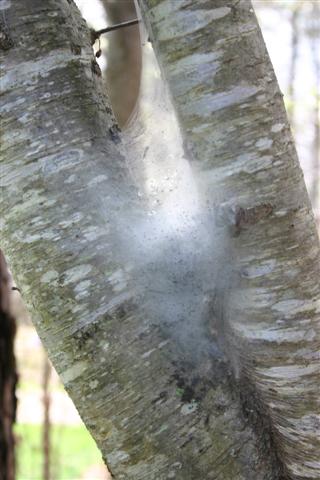
Now that the wild and domesticated cherries have begun to sprout leaves, the eastern tent caterpillars have hatched and are now contained in spider-like webs that can be seen in the crotch at the base of tree branches. Usually, these caterpillars don't cause significant harm but their webs are unsightly and they do consume the early leaves. Control usually consists of breaking open the webs thus allowing predators access. These caterpillars will drop from the trees in a few weeks and disappear. Any damage they cause will be gone by summer. |
|
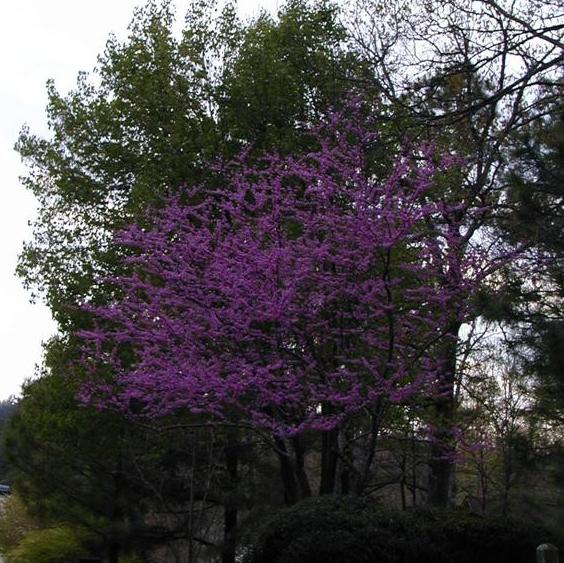
The redbuds look exceptionally handsome this year with their bright lavender flowers as seen at the edges of woods or planted in landscapes. Soon the heart-shaped leaves will appear followed by bean-like seed pods at the end of the summer. Redbuds are wonderful trees for smaller landscapes or at the edges of woods. |
|
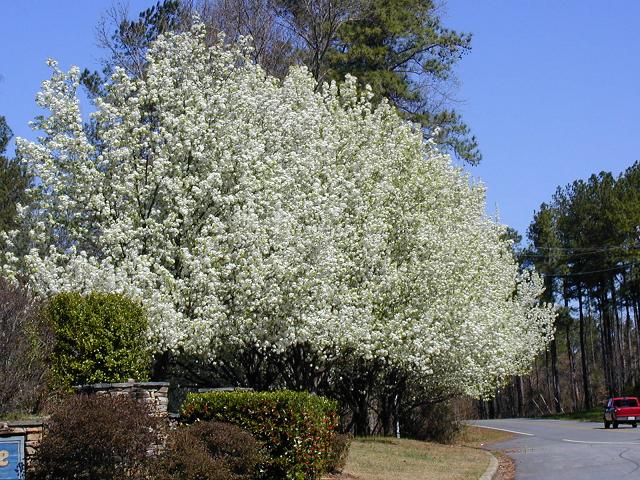
Although attractive in flower, with deep green leaves to follow that have good fall color, the Bradford Pear is often described as
the worst tree sold in America and for good reason. The flowers smell like week-old fish, the structure of the tree is weak because
all the branches grow from the same location on the trunk, they are short-lived and often get the disease fire blight. The main flaw
with the tree is the structure. As the limbs grow, they press on each other usually resulting in a catastrophic and sudden splitting
in wind or ice. There are much better trees on the market. Bradford Pears are considered trash trees. In my opinion,
all calleryana pear cultivars are not worth of garden space.
Click here to read a strongly worded article. |
|
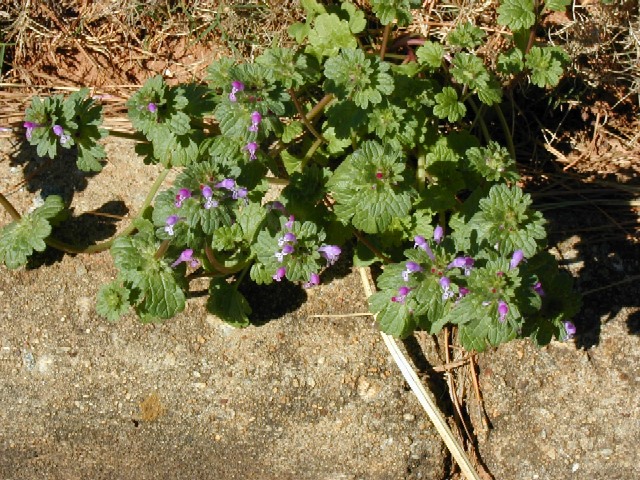
It's at this time of year that we get a lot of emails and calls about a purple-flowering weed in lawns and gardens. Henbit is beginning to bloom along roadsides and in landscapes that were not treated with pre-emergents in the fall. In mass, the flowers make for an attractive roadside display, but this is a pernicious non-native weed. A winter annual, hanbit will be dead by late spring but will drop many, many seeds. |
|
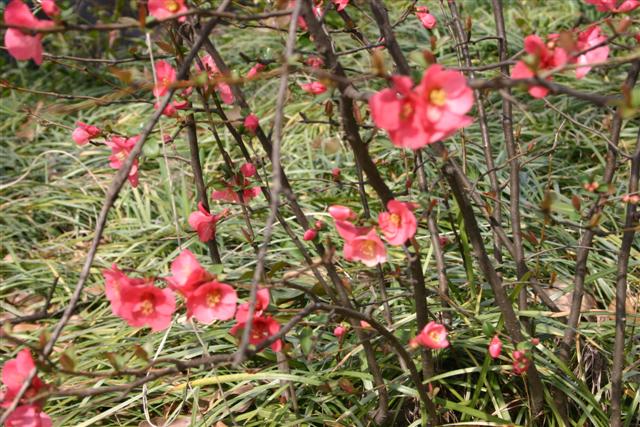
In bloom right now with rosy-pink flowers on thorny, sprawling, tangled, leafless shrubs. These winter-blooming plants are usually just a few weeks ahead of the forsythia. By summer, the shrub will bear apple-sized yellow fruit that is edible. |
|
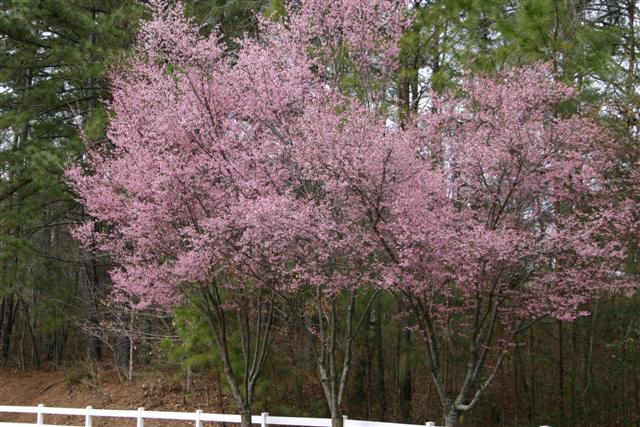
Every time I see okame cherries starting to bloom, I feel as though my stomach is getting upset - not because I dislike these trees, it's because of the color of their flowers. Most people think or are told that these early blooming pink-purple flowering trees are redbuds (Cercis canadensis), but the redbuds won't be in bloom for several more weeks. Okame cherries are slightly more pink than redbuds and their flower color reminds me of Pepto-Bismol, hence that upset stomach feeling. |
|
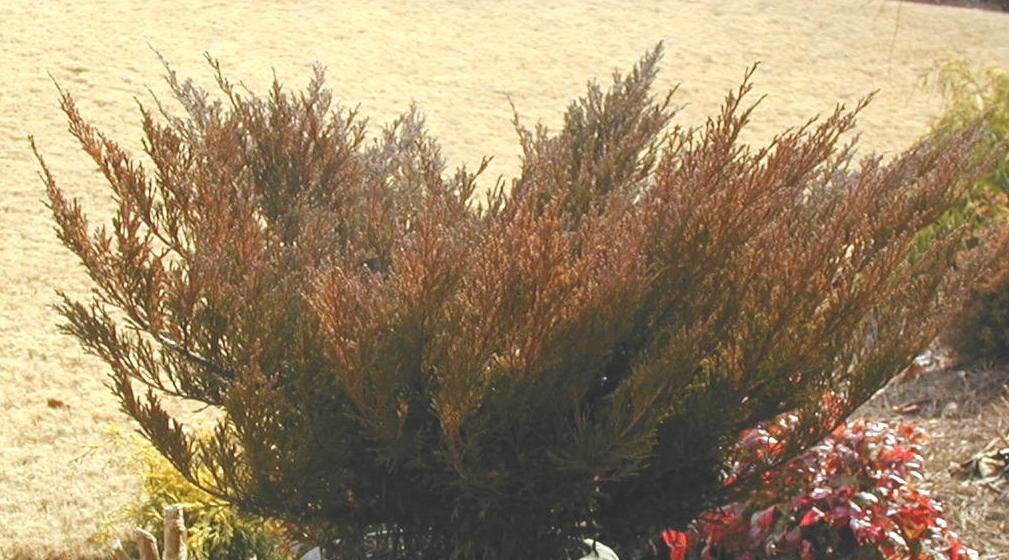
During the winter months, some conifer foliage will become a bronze almost orange color. This is a normal reaction by some plants to the cold, dry weather. It's commonly seen in junipers, cryptomeria, arborvitae, etc. There is no problem with the plant and they will again turn green in the spring. |
|
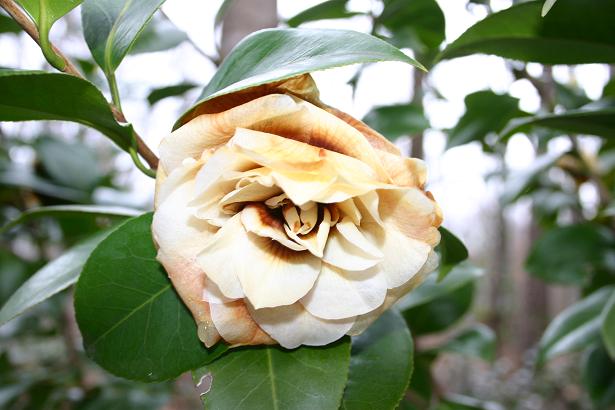
This poor White by the Gate Camellia japonica had beautiful crisp white flowers only to be hit hard with temperatures in the teens about ten days ago. To save the plant from wasting energy on these flowers, I will pull them off this weekend. |
|
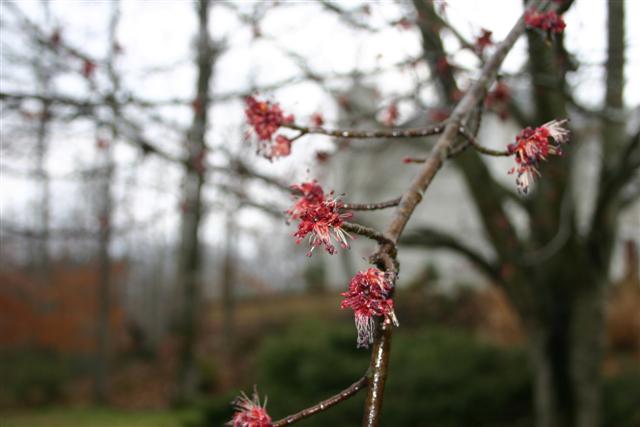
I caught a glimpse of several red maples in bloom this week. While some flowers were red, others that opened before the intense cold of last week had turned brown. This is a bit early for these trees to bloom. I have noted that those that were blooming were more in the open where they received full sun. |
|
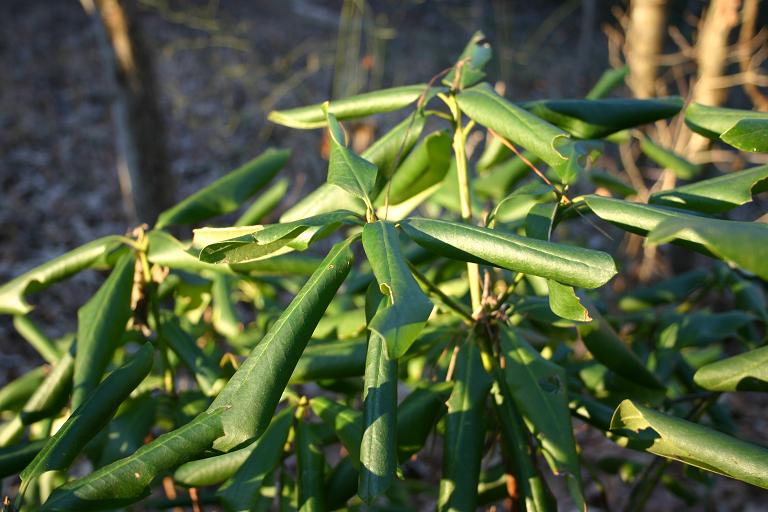
When winter temperatures become very cold, many well-adapted and hardy broadleaf evergreen shrubs will wilt or roll their
leaves as protection against the cold. This mountain rhododendron is well-suited to handle temperatures that can be 0 degrees
or colder. Once the temperatures warm up later in the day or a bit of sunshine hits the leaves, they will uncurl without
any damage.
And for those of you keeping track, my weather station recorded a low on Friday morning of 11.2 degrees. |
|
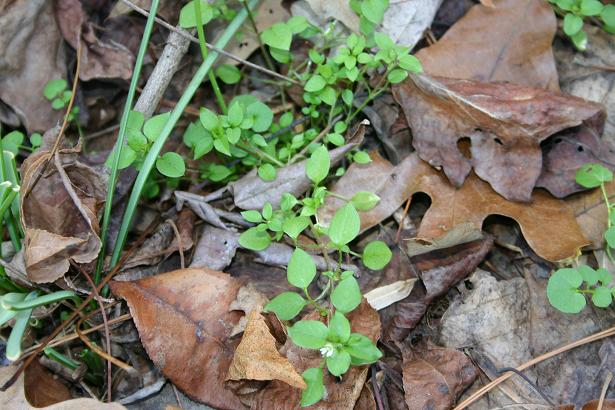
Common chickweed is a winter annual weed that is native to Europe. It germinates in the fall through winter (on warm days), sets seed and dies in the spring. It can be prevented by using a pre-emergent herbicide in mid September. Once it has germinated, use a broadleaf weed killer such as Weed-B-Gone to kill it in turf grass areas. |
|
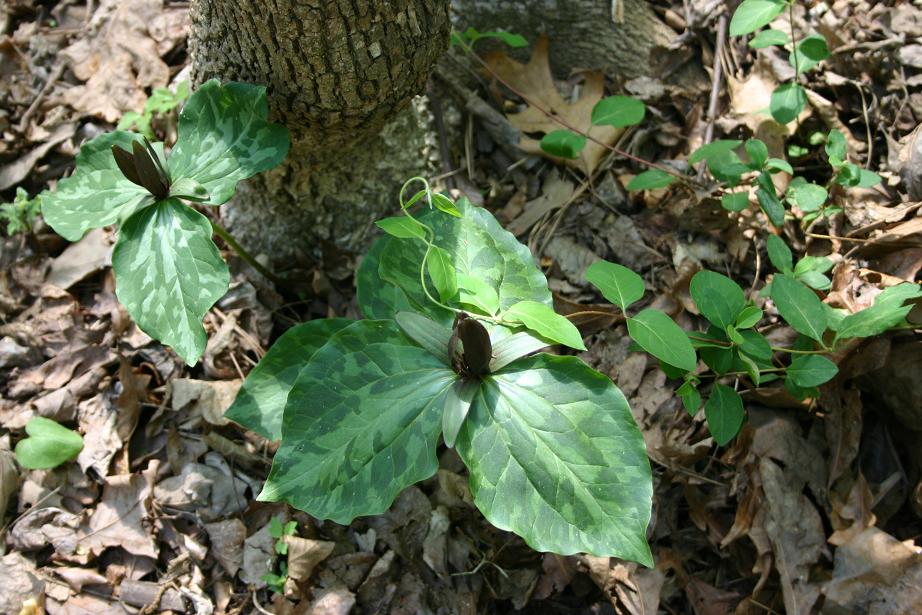
It's the first Saturday of the year which I officially deem as "Invasive Plant Awareness Day" for the Lawn and Garden Show. This picture shows a native toadshade trillium (Trillium cuneatum) being taken over by the Japanese Honeysuckle vine. If you don't see a problem with non-native invasive plants, then visit this link: Plant Invaders |